
Did you know that nearly 40% of all disaster claims in the United States occur outside of high-risk zones? As summer temperatures climb, so does the anxiety surrounding unpredictable weather patterns across the Sunshine State. You are likely feeling the pressure to secure your property against rising water levels before the next storm hits.
Sean brings a wealth of expertise to this challenge, having started his career at Raymond James Financial and Allstate in St. Petersburg. His deep background in managing client portfolios and providing personalized financial planning offers a unique perspective on risk management. He understands that your home is your most significant asset.
Proactive planning remains the most effective way to protect your financial future during these volatile months. By securing proper Flood Insurance now, you gain peace of mind knowing your family is shielded from the unexpected. Taking action today ensures you are not left vulnerable when the skies turn gray.
Key Takeaways
- Most disaster claims happen in areas not officially designated as high-risk.
- Summer weather patterns in Florida require immediate attention to property protection.
- Sean’s professional background at Allstate provides him with deep industry insight.
- Personalized financial planning is essential for long-term asset security.
- Taking early action is the best defense against seasonal water damage.
The Growing Importance of Flood Insurance in Florida
Living near the ocean is lovely, but it comes with a big responsibility. Many people think their regular insurance covers water damage. But, that’s not true. Getting flood insurance Florida is key to keeping your home safe.
Understanding Flood Risks in Florida
Florida’s shape makes it very prone to flooding. With a long coastline and low areas, even small storms can cause big water problems. Coastal insurance is not just extra; it’s a must for those in danger zones.
How high your property is matters a lot when water rises. Think about these things when you check your flood risk:
| Risk Factor | Impact Level | Insurance Priority |
|---|---|---|
| Proximity to Coast | High | Critical |
| Elevation Level | Moderate | High |
| Storm Surge History | Extreme | Essential |
The Impact of Climate Change on Weather Patterns
The weather is changing, and so are the storms. We’re seeing storms that last longer and dump more rain. This means flood insurance Florida is a must for your future.
With the weather getting wilder, old ideas about safety are risky. Coastal insurance gives you a safety layer that regular insurance can’t. By getting it now, you keep your home safe, no matter what the weather does.
Recent Flooding Events in Florida
Florida has seen more flooding lately, changing how we think about property safety and financial protection. The state faces more severe weather, causing water damage in both coastal and inland areas. It is no longer a question of if, but when, a major event might impact your neighborhood.
Case Studies: Significant Flood Incidents
Looking at past data, homes in FEMA flood zones often suffer the most financial loss. During hurricanes, low-lying areas saw severe damage that regular insurance didn’t cover.
Even homes just outside FEMA flood zones were hit hard. Heavy rain and storm surges can flood areas not thought to be at risk.
Lessons Learned from Previous Floods
One key lesson is that using old maps is risky. You need to check if your property is in a FEMA flood zone to get the right insurance.
Being prepared is key against Florida’s unpredictable weather. With the right elevation certificates and insurance, you can protect your financial future from water damage costs. Taking action today prevents the regret of being underinsured tomorrow.
How Flood Insurance Works
Many people think their regular insurance covers everything. But, it’s key to know how Flood Insurance works for your safety. Homeowners often find out too late that their coverage has big gaps. Learning about this now can prevent big problems later.
Key Terms to Know About Flood Insurance
Understanding your policy means knowing some basic terms. A deductible is what you pay first before insurance helps. It’s important to know the difference between replacement cost and actual cash value.
The waiting period is another key thing. Most policies don’t start right away. They often need 30 days to begin. Knowing this can help you avoid surprises when you need to file a claim.
The Difference Between Flood Insurance and Homeowners Insurance
Many think their regular policy covers all disasters. But, most policies don’t cover water damage or storm surges. That’s why you need water damage coverage to protect your home.
Your regular policy might cover a pipe burst inside, but not flooding. Flood Insurance is made for this specific risk. Here’s a table showing the main differences between the two.
| Feature | Homeowners Insurance | Flood Insurance |
|---|---|---|
| Primary Purpose | General property protection | Rising water/storm surge |
| Water Damage Coverage | Limited to internal plumbing | Comprehensive external flooding |
| Policy Structure | Standardized annual contract | Specialized risk-based policy |
| Mandatory Requirement | Required by mortgage lenders | Required in high-risk zones |
Getting water damage coverage keeps your home safe no matter the weather. Don’t wait for a storm to see your policy is not enough. Check your insurance today to make sure it fits your needs.
Who Needs Flood Insurance in Florida?
Figuring out if you need flood insurance is key for anyone in Florida. Many think their regular home insurance covers water damage, but it usually doesn’t. Relying on government help after a flood is a risky financial gamble, as funds are limited and not guaranteed.
Getting your own flood insurance Florida policy gives you peace of mind. It doesn’t matter if you own a big house or rent a small one. The risk of flooding doesn’t care about your property status.

Homeowners vs. Renters: Who Should Be Covered?
If you own a home, your lender might ask for insurance. But even if you own your home outright, you should still get it. Your home is probably your most significant financial asset. A single flood can cause tens of thousands of dollars in damage.
Renters often think their landlord’s policy covers their stuff, but that’s not true. Landlord insurance only covers the building, not your belongings. Getting a flood insurance Florida policy for renters is the only way to protect your personal items from water damage.
Areas Prone to Flooding: A Quick Guide
Finding out if you’re at risk is simple. Check official flood maps from local authorities to see if your area is high-risk. But remember, even low-risk areas can flood during bad weather.
If you live near the coast, a river, or in a low-lying area, you really need flood insurance Florida. Don’t wait for a storm warning to check your risk. Taking action now can save you from financial disaster when the next big rain hits.
The Role of the National Flood Insurance Program (NFIP)
Learning about flood protection can help keep your home safe from water damage. The National Flood Insurance Program (NFIP) is key for those in flood-prone areas. It offers reliable water damage coverage to help you recover after a disaster.
How NFIP Policies Are Structured
The NFIP has a simple system to protect your property. Its policies offer consistent protection in any participating community. They cover two main things: your home’s structure and your personal items.
This two-part approach ensures your home and belongings are covered. The federal government supports these policies, offering security hard to find elsewhere. The program uses risk maps to figure out what you need, making it clear and easy to understand.
The Benefits of Participating in NFIP
Joining the NFIP has big financial benefits. One key advantage is the streamlined claims management process. This helps you recover faster after a flood. You also know your policy meets federal standards.
Also, the program helps communities manage flood risks better. By joining, you help reduce flooding’s impact in your area. This makes water damage coverage more affordable and sustainable for everyone in the program.
Private Flood Insurance: An Alternative Option
Private Flood Insurance is changing how homeowners protect their homes. Many now look for better value and flexible terms. This lets you tailor your protection to your home’s unique risks.
Pros and Cons of Private Plans
Private carriers offer significant advantages like higher coverage and faster policies. But, they also have trade-offs to consider. The table below shows key differences for coastal insurance.
| Feature | Private Insurance | Government Policy |
|---|---|---|
| Coverage Limits | Often higher | Standardized |
| Waiting Period | Usually shorter | Typically 30 days |
| Pricing | Competitive/Market-based | Fixed/Risk-based |
| Availability | Varies by carrier | Nationwide |
When to Consider Private Flood Insurance
Consider private insurance if your home needs more coverage than federal programs offer. High-value homes often require private Flood Insurance for full protection. This is also true for those wanting coastal insurance with extra living expenses or basement coverage.
Private insurance is also great for quick coverage. If you’re buying a home and need a policy fast, private insurers can help. Make sure the carrier is financially stable to handle big claims. By comparing, you can find the best coastal insurance for your needs.
Factors Influencing Flood Insurance Costs
Knowing the cost of your flood insurance starts with understanding how insurers see your property. When you look for flood insurance Florida, companies check certain data to figure out your risk. This helps make sure your premium matches the real chance of water damage to your home.
Location and Elevation: How They Affect Premiums
Your home’s location is key in setting your rates. Homes near coasts, rivers, or low areas face more flood risk. This means your flood insurance Florida policy will cost more.
Elevation helps protect against floods. Homes higher up are less likely to get damaged. Insurers give lower rates to those who build higher.
The Role of Home Characteristics in Pricing
How your house is built also affects your risk. Insurers look at different parts of your home to see how it can handle floods. Picking the right materials and design can help lower your flood insurance Florida costs.
Here are some structural factors that affect your quote:
- Foundation Type: Homes on piers or stilts get lower rates than slab foundations.
- Building Materials: Using water-resistant materials in lower levels can lower claim payouts.
- Age of Construction: Newer homes meet stricter codes, which can lower your risk.
| Risk Factor | Impact on Premium | Mitigation Strategy |
|---|---|---|
| Low Elevation | High | Install flood vents |
| Slab Foundation | Moderate | Elevate utilities |
| Proximity to Water | High | Flood-proofing barriers |
Every detail about your property tells insurers a story. By knowing these factors, you can make smart choices to protect your home and manage costs over time.
Flood Zone Maps and Their Importance
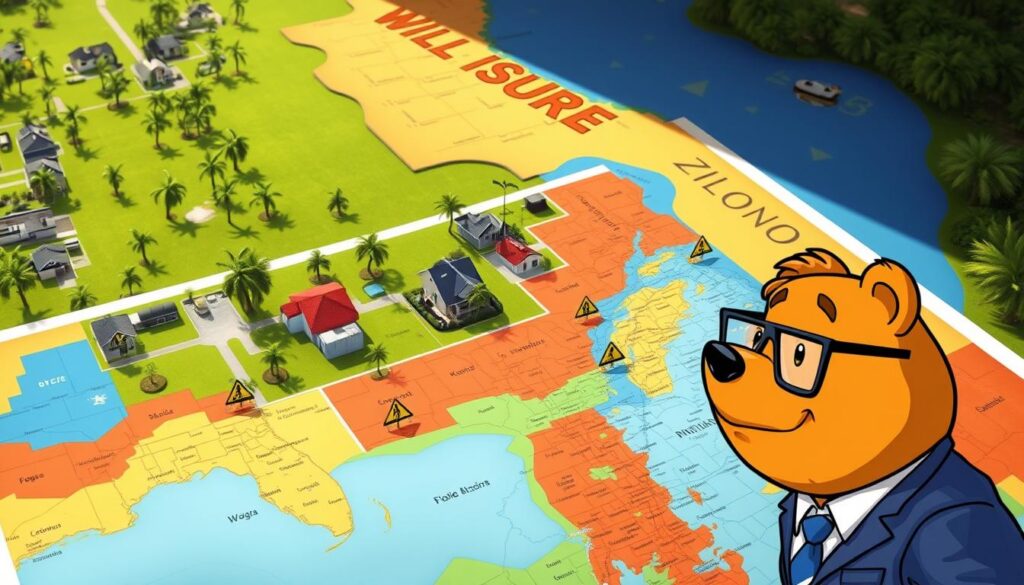
Understanding flood maps is crucial for Florida homeowners. These maps help figure out your risk level and insurance needs. Knowing FEMA flood zones lets you protect your property wisely.
How to Read and Interpret Flood Zone Maps
Start by finding your property on the government’s official website. Look for letters that show your risk level. Areas marked with “A” or “V” are high-risk, needing flood insurance for mortgages.
Lower-risk zones have “X”, “B”, or “C” labels. But, don’t think you’re safe from floods. Even in lower-risk zones, water damage can happen, making insurance a good choice.
What If Your Property’s Status Changes?
Flood maps change over time. New projects or natural changes can update your zone. This might make your insurance more expensive or cheaper.
If your zone gets higher, your insurance might go up. But, if it goes down, you could save a lot. Keep an eye on these changes by checking with your local manager or the official website.
Being aware of changes helps you stay financially secure. By watching your zone, you protect your home from Florida’s unpredictable weather.
The Claims Process: What to Expect
Filing a claim for water damage coverage can seem daunting. But, a clear plan makes it easier. After a flood, acting fast and following steps helps a lot. This way, you can manage the situation better.
Steps to File a Flood Insurance Claim
When it’s safe to go back, start the recovery right away. Here are the key steps to keep your claim on track:
- Notify your insurance provider right away to start the claim process.
- Take clear photos and videos of the damage before you clean up.
- Make a detailed list of damaged items, including receipts or model numbers.
- Save all receipts for emergency repairs or temporary housing, as they might be covered.
- Set up a time for your adjuster to check the property and confirm the damage.
Common Mistakes to Avoid During the Process
Many homeowners make mistakes that can hurt their claims. Avoiding these mistakes is key to protecting your money and ensuring a fair claim process.
One big mistake is not knowing the rules for FEMA flood zones. If you don’t give the right documents about your home’s elevation or status, you might face big delays. Always check with your agent about your zone before the storm season starts.
Another mistake is getting rid of damaged items before the adjuster sees them. Even if they’re ruined, keep them or take photos to support your water damage coverage claim. Lastly, don’t wait too long to file; most policies require you to report quickly.
Preparing for Hurricane Season in Florida
Florida’s hurricane season is serious business. It’s not just about hoping for the best. You need a solid plan to keep your home and family safe. Starting early is the most effective way to reduce damage and keep your loved ones safe.
By linking your coastal insurance plan to your emergency prep, you build a strong safety net for your home.
Essential Steps for Homeowners
First, inspect your home’s outside. Make sure your roof, windows, and doors can handle strong winds. Also, clear your yard of loose items like patio furniture or plants. This prevents them from becoming dangerous during a storm.
Check your coastal insurance policy to know your coverage and deductibles. Take photos or videos of your belongings before the season starts. This makes filing claims easier if you need to after a flood.
The Importance of Having an Emergency Kit
A good emergency kit is key to your survival plan. Stock up on non-perishable food, water, and medical supplies for at least 72 hours. Don’t forget to include important documents like insurance papers and ID in a waterproof container.
Also, have a clear evacuation plan that everyone knows. Know your evacuation routes and a safe place to go ahead of time. With these steps and reliable coastal insurance, you’ll feel more secure for whatever the season brings.
Community Resources for Homeowners
You don’t have to face rising waters alone. There are many community resources available. By connecting with neighbors and local agencies, you get a safety net beyond insurance. These networks offer critical info to protect your home and family.
Local Organizations Offering Assistance
Your local government and non-profits are key in emergencies. Groups like the American Red Cross and your county’s Office of Emergency Management offer training and planning. They host workshops to teach how to protect your home from water.
Working with these groups keeps you updated on neighborhood risks. They share flood maps and mitigation strategies for your area. Building these relationships now means you have a reliable contact when disaster strikes.
Online Resources for Flood Preparedness
Digital tools have changed how we deal with environmental threats. Sites like FloodSmart.gov show your risk level with interactive maps. Mobile apps from local news or the National Weather Service send alerts to your phone.
“True resilience is not just about individual preparation; it is about the collective strength of a community that shares knowledge and resources before the storm arrives.”
Using these online platforms keeps you informed about weather changes. You can track storm surges and rainfall totals. This helps you make proactive decisions for your home’s safety. Here’s a table showing the support you can get from different resources.
| Resource Type | Primary Benefit | Accessibility |
|---|---|---|
| Local Emergency Office | Evacuation routes | High |
| FloodSmart.gov | Risk assessment | High |
| Community Workshops | Hands-on training | Medium |
| Weather Alert Apps | Real-time updates | High |
By using digital tools and local support, you build a strong plan for your home. Staying connected means you’re always prepared for emergencies. Take the time today to save these resources and meet your local emergency team.
Future of Flood Insurance in Florida
Protecting your property is key as the environment changes in the state. You have a big role in keeping your finances safe by knowing about new ways to manage risks.
Innovations in Flood Risk Management
New tech gives us detailed info on water patterns. This helps you see your risk before a storm hits. Using these tools helps you make better choices about your Flood Insurance.
The Evolving Landscape of Insurance Policies
Insurance plans are changing to help coastal residents. Make sure your plan fits the new safety standards. Getting good flood insurance in Florida is the best way to protect your stuff from bad weather.
Every hurricane season, you should feel safe. Ready to get ready for the future? Call us at (813)-723-1450 or email at prez@meetsean.net for help. Our team is here to guide you through your policy choices.