
Ever opened a medical bill and felt like it was a secret code? Many patients in America feel this way.
This document is not a bill, but it affects how much money you keep. Truly Understanding the EOB ensures your insurance claims are processed right.
Gaining mastery over your explanation of benefits prevents costly errors. Knowing what your plan covers is key.
Many families lose money by ignoring these summaries. Don’t let confusion empty your savings. Identifying each line item lets you challenge unfair charges.
Ready to take control of your finances? Call us at (813)-723-1450 or email at prez@meetsean.net for help with healthcare costs and financial planning.
Sean can guide you through financial complexities. Expert advice keeps your medical spending in check.
Key Takeaways
- Recognize this document as a summary, not an invoice.
- Confirm provider details and service dates are correct.
- Review patient responsibility portions versus insurer payments.
- Check for denied claims requiring further action.
- Reach out for professional financial planning assistance.
What is an Explanation of Benefits (EOB)?
Getting to know your healthcare costs starts with understanding your Explanation of Benefits (EOB). This document is key to managing your healthcare expenses. It helps you make smart choices about your care.
Definition of an EOB
An Explanation of Benefits (EOB) is a statement from your health insurance company after you’ve seen a doctor. It shows what services you got, the costs, and what your insurance paid. The EOB is not a bill; it’s a summary of your medical services and insurance coverage.
Purpose of the EOB
The main goal of an EOB is to tell you about the medical services you’ve had and how your insurance covers them. It helps you grasp the financial side of your healthcare. By looking at your EOB, you can check if the services are right and if you’re being charged fairly.
How the EOB Differs from a Bill
It’s important to know the difference between an EOB and a medical bill. An EOB gives a summary of services and insurance coverage. A medical bill is a request for payment from your healthcare provider. You might get many bills from different providers, but one EOB from your insurance for all related services.
As you look at your EOB, remember it’s crucial for making smart healthcare choices.
Key Components of an EOB
Your EOB has important details to help you track your medical costs. It helps you make smart choices about your health care. Knowing what your EOB says can help you manage your health expenses better.
Patient Information
The patient info section of your EOB is key. It shows your name, insurance ID, and when you got care. It’s important to check this info is right to track your deductible and avoid billing mistakes.
- Name and insurance ID number
- Date of service
- Type of service received
Provider Details
The provider details section gives you the healthcare provider’s info. It includes their name, address, and billing details. This part is crucial for knowing who gave you care and who to talk to about your bill.
Claim Summary
The claim summary is a vital part of your EOB. It shows the charges for your care, what your insurance paid, and what you owe. Knowing this helps you handle your health insurance billing well.
- Total charges for the service
- Amount covered by insurance
- Patient responsibility (deductible, copayment, coinsurance)
By looking at these parts, you can understand your healthcare costs better. This helps you make better choices about your health care.
Decoding Your EOB: Line by Line
Your EOB has important details about your healthcare costs. Let’s take a closer look. Understanding your EOB line by line helps you grasp your medical expenses. It also helps you make smart choices about your care.
Understanding Charges
The charges section shows the costs of the medical services you got. It lists the amount your healthcare provider billed for each service. It’s key to check these charges against the services on your statement. Any differences could mean billing mistakes.
Payment Breakdown
The payment breakdown section explains how your insurance handled the claim. It shows what your provider got paid and any adjustments due to your plan’s coverage. Knowing this helps you understand how your insurance impacts your costs. For example, you might see coinsurance deductions, which are your share of costs after meeting your deductible.
Patient Responsibility
Your patient responsibility section shows what you owe for the services. This includes copays, deductibles, and coinsurance. It’s important to check this section to avoid being charged for services you didn’t get or for amounts not covered by your plan. If you spot any issues, reach out to your provider or insurance company to fix it.
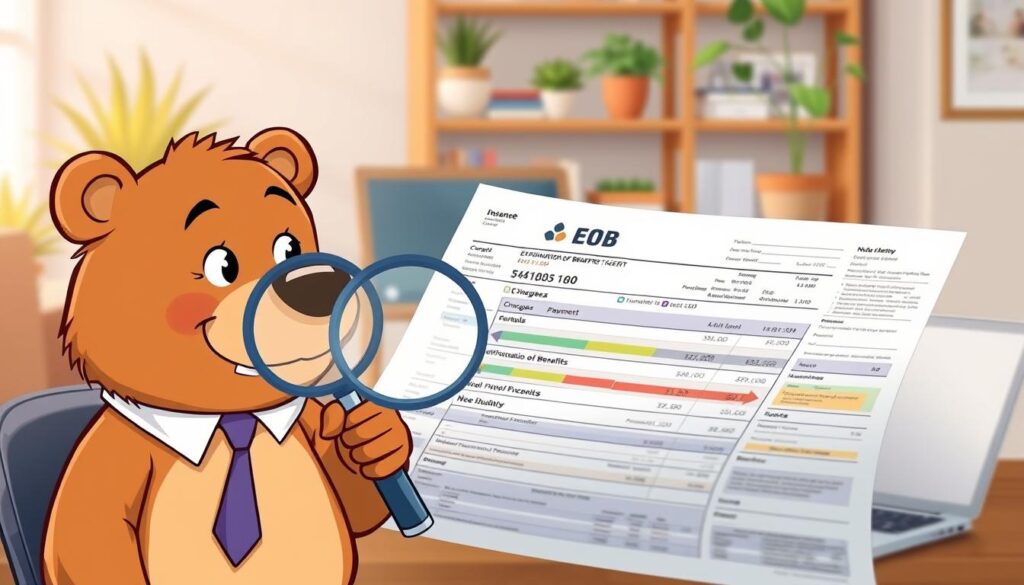
By grasping the charges, payment breakdown, and your responsibility, you can manage your healthcare costs better. This knowledge lets you make informed decisions about your care and might even lower your medical bills.
Common Terms You Should Know
Understanding healthcare billing can seem tough. But knowing key terms on your Explanation of Benefits (EOB) is key. Your EOB shows important details about your healthcare costs. Knowing these terms helps you make smart choices about your health.
Copayment Explained
A copayment, or copay, is a set amount you pay for services or meds. It’s a simple way to share costs with your insurance. For example, you might pay $20 for a doctor’s visit. Knowing your copay helps you track expenses and manage your health costs better.
Deductibles vs. Coinsurance
Deductibles and coinsurance are important in health insurance billing. Your deductible is what you pay before your insurance starts. Coinsurance is the percentage you pay after you’ve met your deductible. For instance, if you pay 20% of costs, your insurance pays 80%.
- Deductible: The amount you pay before insurance coverage begins
- Coinsurance: The percentage of costs you pay after meeting your deductible
Out-of-Pocket Maximum
The out-of-pocket maximum is the most you’ll pay for healthcare in a year. This includes copays, deductibles, and coinsurance. After you hit this limit, your insurance covers 100% of eligible costs. Knowing this limit is crucial for budgeting and planning.
Learning these common terms helps you understand healthcare billing better. It also lets you make informed decisions about your health. Plus, it helps you track expenses and plan for future healthcare needs.
How to Use Your EOB for Financial Planning
Your EOB is more than a statement; it’s a financial planning tool. It helps you understand and use your healthcare spending information. This way, you can budget better, compare costs, and track your medical expenses.
Budgeting for Healthcare Costs
Budgeting for healthcare costs is not just about saving money each month. It’s about knowing your healthcare expenses, like coinsurance and deductibles. Your EOB breaks down these costs, helping you plan for the future.
To budget well, look at your EOBs from the past year. Notice patterns in your spending. Think about how often you visit doctors, the cost of treatments, and any extra expenses.

Comparing Provider Costs
Using your EOB to compare healthcare provider costs is very useful. By looking at your EOB, you can see price differences for the same services. This helps you choose the best healthcare options for your budget.
When comparing costs, think about more than just the price. Consider the quality of care and how convenient the services are. Sometimes, paying a bit more can mean better care or more convenience.
Tracking Medical Expenses
Keeping track of your medical expenses is key to managing your healthcare finances. Your EOB shows your expenses, helping you monitor your spending. By watching your expenses, you can find ways to save or spend smarter.
Use a spreadsheet or a financial tool to track your medical expenses. This keeps you organized and helps you make the most of your healthcare budget.
Errors and Discrepancies: What to Look For
Errors in your EOB can lead to unexpected medical bills. It’s crucial to check the document carefully. Knowing what to look for can help you fix these issues and get accurate billing.
Common EOB Errors
Several types of errors can occur in an EOB, including:
- Incorrect patient information
- Misclassified or unbundled codes
- Duplicate charges
- Services not rendered
How to Dispute an Incorrect EOB
If you find an error in your EOB, act quickly. First, contact your healthcare provider’s billing department. Tell them about the mistake and ask for a fix.
Steps to dispute an EOB:
- Review your EOB carefully and identify the error
- Contact your healthcare provider’s billing department
- Provide documentation supporting your claim
- Follow up to ensure the correction is processed
Importance of Following Up
It’s key to follow up on disputed EOBs. This ensures corrections are made and your account is updated right.
| Action | Timeline | Outcome |
|---|---|---|
| Initial Review | Within 30 days of receiving EOB | Identify potential errors |
| Contact Provider | Within 7 days of identifying error | Report issue and request correction |
| Follow-up | Within 14 days of initial contact | Ensure correction is processed |
Being proactive and careful with your EOB can help you avoid surprise medical bills. This ensures your healthcare costs are correct.
The Role of Your Insurance Company
Your insurance company is key in the healthcare billing process. Knowing how they work helps you make smart choices. It makes navigating healthcare billing easier.
How Insurance Companies Process Claims
Insurance companies check your medical services and decide how much to cover. They verify your coverage, check for deductibles or copays, and use payment rates.
Key steps in claims processing include:
- Verifying patient information and insurance coverage
- Reviewing medical services and determining coverage
- Applying payment rates and calculating patient responsibility
Communication Between Providers and Insurers
Good communication between providers and insurers is vital. It ensures claims are handled right and issues are fixed fast.
Knowing how your insurance handles claims and talks to providers helps manage costs. It also prevents billing problems related to your explanation of benefits.
When to Contact a Financial Advisor
If you’re having trouble with your EOB or planning your healthcare costs, getting help from a financial advisor is wise. It’s key to manage healthcare costs well for your financial health.
Benefits of Professional Guidance
A financial advisor can guide you through your EOB’s complexities. They help you understand deductible tracking and coinsurance. With their advice, you can make smart choices about your healthcare spending.
“A financial advisor can help you create a personalized plan to manage your healthcare costs, ensuring you’re prepared for any medical expenses that may arise.”
They can also spot errors or wrong information in your EOB. This way, you won’t pay too much for healthcare services.
Financial Planning and Medical Expenses
Good financial planning means knowing your healthcare costs and fitting them into your budget. A financial advisor can assist you:
- Keep track of your medical expenses and spot patterns.
- Plan a strategy for your out-of-pocket maximum.
- Make a budget that includes healthcare costs.
| Financial Planning Strategies | Description | Benefits |
|---|---|---|
| Deductible Tracking | Monitoring your deductible expenses throughout the year. | Helps you anticipate and prepare for healthcare costs. |
| Coinsurance Management | Understanding your coinsurance rates and how they apply to your healthcare costs. | Enables you to budget accurately for medical expenses. |
How to Reach Sean for Assistance
If you want to control your healthcare costs and need expert advice, reach out to Sean. Sean knows a lot about financial planning and healthcare costs. He can offer the support you need.
Don’t wait to ask for help with your EOB and healthcare costs. Talking to a financial advisor like Sean is a smart move for your financial future.
Preparing for Future Medical Needs
Looking at your Explanation of Benefits helps you make smart choices about your health. It shows you the costs and payments for your care. This way, you can manage your money better.
Informing Healthcare Decisions with Your EOB
Your EOB helps you find ways to save money on healthcare. You can see who charges less, track your spending, and plan for the future. This makes your healthcare choices more affordable.
Understanding Healthcare Cost Trends
Checking your EOB often lets you see cost patterns. This helps you get ready for future bills. Knowing this can help you plan your health budget and make better choices about your care.